Eisoptrophobia (Fear of Mirrors): Symptoms, Causes, and Gentle Paths Toward Relief
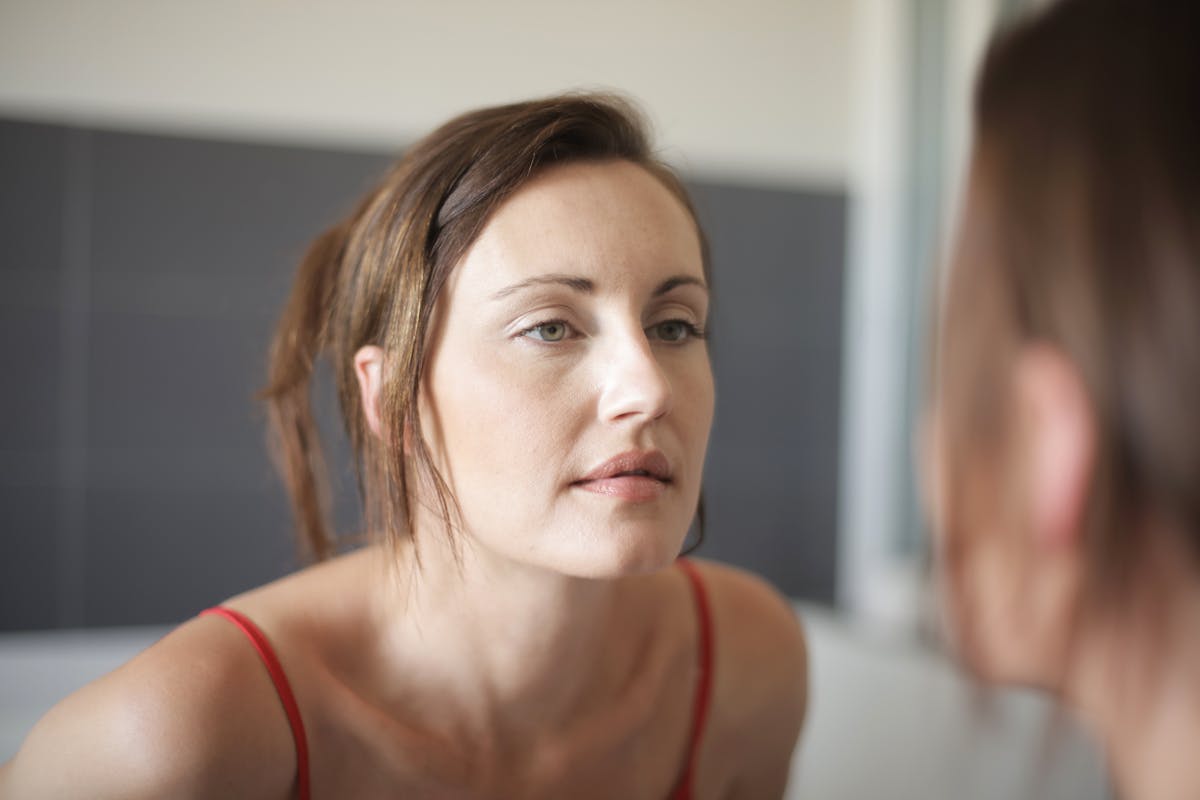
Fear of mirrors — known clinically as eisoptrophobia — is an intense, persistent fear of mirrors or your own reflection that outruns any real danger. It sits on a spectrum: at one end, cultural or superstitious unease; at the other, a specific phobia that reshapes daily life. Graded exposure plus cognitive work is the backbone of relief, and spiritual or cultural interpretations can sit beside clinical care, not replace it.
If brushing your teeth means angling away from the glass, if you skip events because of restroom mirrors, or if your chest tightens whenever a reflection catches movement — that is a real and common experience, and it has a clear psychological explanation. Naming it plainly often matters as much as any technique that follows.
Mirrors are neurologically potent. Infants usually learn to recognise themselves in a mirror between 15 and 18 months, and clinicians still use mirror tasks to study self-awareness. Humans have only had cheap, flawless flat mirrors in every hallway for about a century — our alarm systems evolved long before that. Unease around reflections is understandable even when the optics are completely ordinary.
What Is the Fear of Mirrors (Eisoptrophobia)?
Eisoptrophobia is the fear of mirrors or of seeing your own reflection, classed as a specific phobia inside the wider anxiety-disorder family. A specific phobia, as the Cleveland Clinic's overview of eisoptrophobia describes, is an intense fear of a particular object or situation that is out of proportion to the actual risk — and that distinction, proportion, is the whole game.
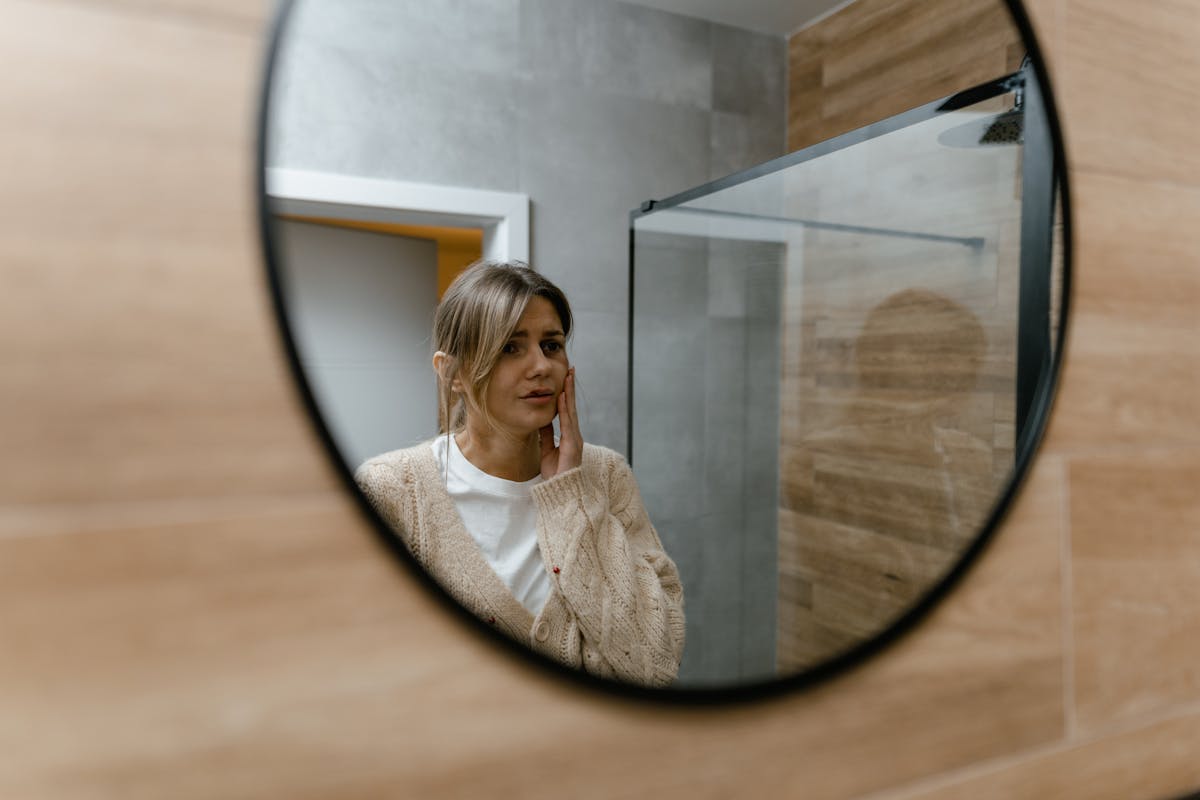
You will see several names for roughly the same thing. Eisoptrophobia emphasises mirrors. Catoptrophobia is another label for fear of mirrors. Spectrophobia is sometimes reserved for fear tied to ghosts or the supernatural side of reflections. Editors and clinics swap these terms because search habits do, and the boundaries genuinely blur. Treat the label as shorthand for talking to a clinician — never as a verdict about how serious or "real" your experience is. What matters is the pattern: a discrete trigger, an exaggerated threat response, and behaviour that bends around avoiding it.
What Does the Fear of Mirrors Feel Like? Symptoms and Behaviours
The fear usually shows up in three channels at once — and you may recognise yourself in one more than the others.

- Body and nervous system. Racing heart, sweaty palms, dizziness, numb lips, nausea, a tight chest — the classic sympathetic surge.
- Thoughts. A looping prediction that the reflection will distort you, trick you, or reveal something unbearable — even while part of you knows the glass is just glass.
- Behaviour. Hanging a towel over the bathroom mirror, shaving or applying makeup by touch, texting before you leave so you do not have to face the elevator mirror, cancelling plans tied to restrooms with bright panels.
Some people tolerate a small mirror for a moment but collapse into panic at a full-length pane. Others feel a delayed jolt hours after a thriller showed a reflection do something wrong. The milder versions look like ordinary self-consciousness turned up too high; the severe versions reorganise a person's routes through the day.
The honest caveat worth stating: most of what is written about mirror fear, here included, is general education, not a diagnosis. Only a clinical interview can tell you where your experience sits.
Superstition, Stress, or Phobia? How to Tell Them Apart
Here is the distinction most articles skip — and the one that actually decides what to do next. "Mirror anxiety" is not a single official diagnosis. It is an umbrella for several different things that can overlap.
| Layer | Emotional tone | Behavioural footprint | Stakes |
|---|---|---|---|
| Cultural / spiritual unease | Curiosity or precaution tied to mourning customs, night-time, Feng Shui, or family stories | Ritual coverings or mindful placement — not usually hours of rumination | Fits a community's meaning system; rarely blocks core functioning |
| General stress or insecurity | Shame spikes under harsh lighting, then calms elsewhere | Hesitation at mirrors, limited avoidance | Mirrors annoy you; they rarely dominate planning |
| Specific phobia | Panic out of proportion, or dread hours ahead of a known mirror | Mirrors removed, errands avoided, routes redesigned | Disruptive across many areas; benefits from targeted therapy |
Superstition supplies the narrative fuel. Roman-era beliefs about a fragment of the soul living in the glass still echo through the seven-year broken-mirror story; some Indian traditions read a break the opposite way, as an auspicious release. Mirrors carry portal imagery through centuries of folklore and horror film. You can intellectually discard every one of those tales and still tense when fluorescent light hits metal-backed glass — the story does not have to convince your reasoning to nudge your alarm system. For the cultural breadth on its own terms, the encyclopedia of mirror superstitions and folklore worldwide maps those beliefs without medicalising them.
What Causes a Fear of Mirrors?
Causes stack rather than stand alone. Most people who develop the fear can point to two or three of these threads woven together.
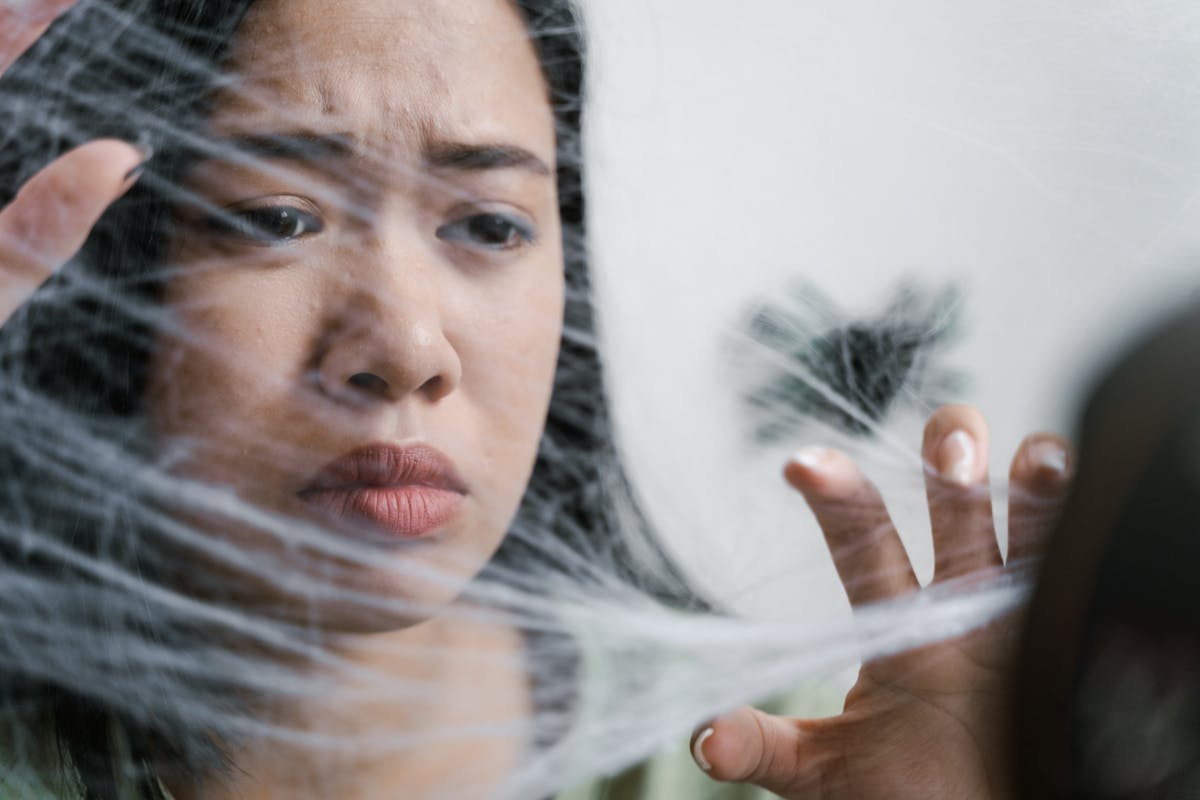
- A frightening learned association. Bullying in a mirrored changing room, a medical crisis under glare, or a jump-scare from a film can weld a neutral reflection to a fear response you never consciously agreed to.
- A vulnerable baseline. Anxiety can run in families. A nervous system already scanning for threats will spotlight the unpredictability a mirror returns.
- Body-image pain. Mirrors become adversarial when appearance is a wound. A 2024 study in behavioural therapy found that deliberate, self-focused mirror gazing lowered appearance satisfaction even in people without body dysmorphic disorder — the mirror itself can briefly make things feel worse. If that is your angle on this, the piece on why you can look worse in mirrors untangles the optics from the self-criticism.
- OCD and intrusive doubt. Compulsive checking paradoxically deepens uncertainty; avoidance compulsions block the experiments that would teach your body the encounter is safe.
- Cultural learning. If you grew up around beliefs that mirrors are thresholds for spirits or souls, those templates load the moment before any conscious thought arrives. The honest version of that idea is explored in can mirrors trap souls or spirits?
For scale: body dysmorphic disorder affects roughly 1.7–2.9% of the general population, and one 2024 survey found about 73% of college-age participants held broadly negative views of their own body image. Negative body image is not the same as a phobia or a disorder — but it shows how many nervous systems already treat the mirror as a courtroom.
How Common Is It, and How Is It Diagnosed?
There is no clean prevalence figure for eisoptrophobia specifically, because it is often folded into broader specific-phobia statistics and frequently travels with other conditions. Specific phobias as a group are among the more common anxiety presentations, which is part of why authoritative bodies like the National Institute of Mental Health frame them by persistence and impairment rather than by how unusual the trigger is.

Diagnosis is not a quiz about mirrors. A clinician interviews for how long the fear has lasted, how severe the avoidance is, how much it impairs daily life, and whether something else is driving it — because the treatment branches differently depending on the answer. Mirror fear riding on PTSD needs trauma stabilisation first. Mirror fear that is really compulsive appearance-checking points toward OCD- or BDD-informed care. Pure phobia points toward graded exposure. The label matters far less than that formulation.
It also rarely arrives alone. Fear of mirrors commonly travels with other specific phobias and anxiety patterns, and it overlaps at the edges with several conditions worth naming so you can describe yours accurately: social anxiety (where the dread is about being seen and judged), body dysmorphic disorder (where the focus is a perceived flaw rather than the mirror itself), and the supernatural strand sometimes called spectrophobia (where the fear is of what the reflection might contain). These are not competing diagnoses to win — they are different doors into care, and a good assessment is mostly about finding which door fits. That is also why self-diagnosis from a symptom list, while a reasonable starting point, is not the finish line.
What Actually Helps: Treatment and Coping
The encouraging part — and the research here is genuinely more hopeful than most people expect — is that specific phobias are among the most treatable anxiety conditions.
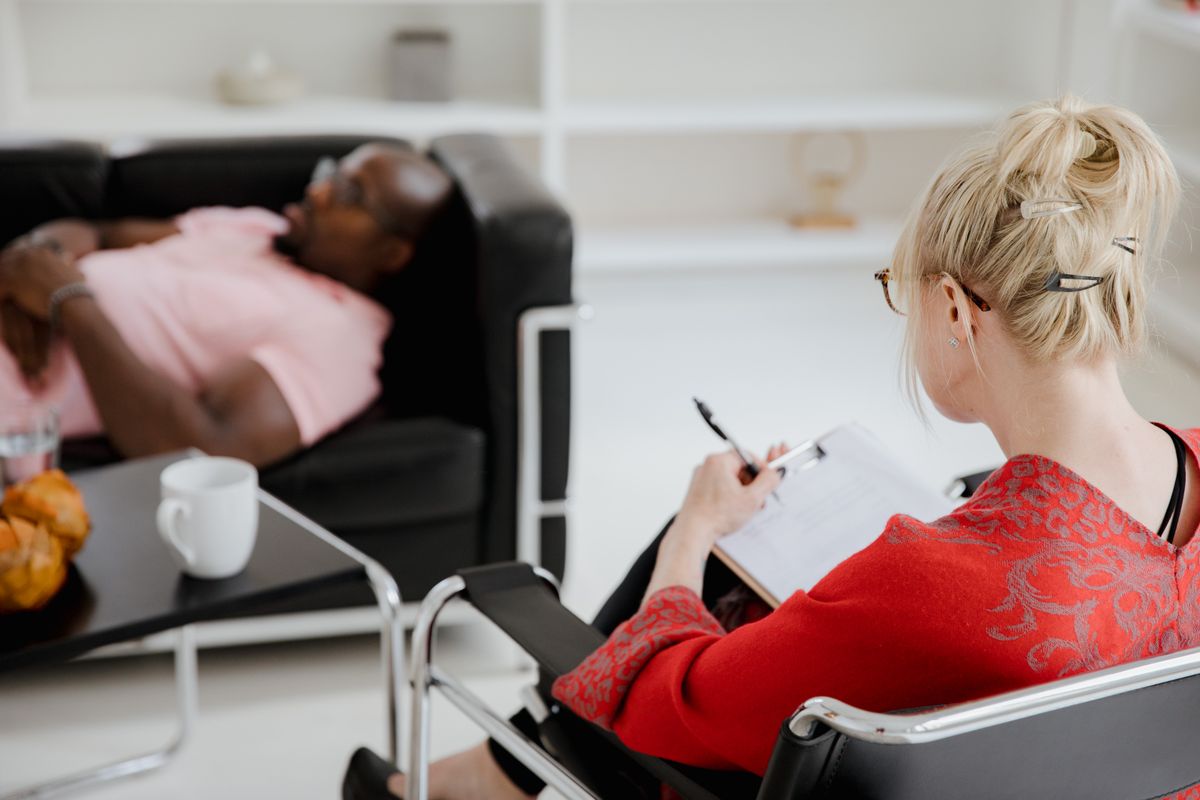
The two best-supported approaches are graded exposure and cognitive behavioural therapy, usually together. Exposure means building a ladder of mirror-related tasks ranked by distress, then climbing it at a tolerable pace — a glance before a stare, a small mirror before a full-length one, soft light before bright. CBT works alongside it, catching the catastrophic prediction ("I will fall apart if I look") and testing it against what actually happens. Clinicians sometimes add short-term medication when panic or depression makes the work hard to start, but medication is scaffolding, not a cure.
Why avoiding mirrors makes the fear worse
This is worth stating plainly, because many people in distress are quietly betting their relief on avoidance: mirror avoidance makes anxiety worse, not better. Every covered mirror confirms to your nervous system that the glass was dangerous, and it removes the only evidence that would prove otherwise. The mental image of what you might see expands to fill the space the real reflection leaves empty.
One reader described covering her bathroom mirror for six months after a period of intense self-criticism about her appearance. The avoidance made things worse. When she finally worked with a therapist using gradual exposure, what surprised her most was not what she saw — it was how far her mental image had drifted from her actual reflection. That gap is the thing exposure closes.
Gentle, evidence-aligned steps you can try
These are psychoeducation, not a prescription — and best done with support if the fear is severe:
- Build a small exposure ladder. Rank tasks 0–10 by distress and move up only when a step stops spiking you.
- Pair each step with slow breathing. Lengthen the exhale; let arousal settle before and during a glance.
- Narrate sensations neutrally. "Heart fast, cheeks warm, no catastrophe." You are recording an outcome, not auditioning for calm.
- Ground yourself. Feet pressed to the floor, naming textures or sounds — this widens attention when tunnel vision threatens.
- Treat what sits underneath. Trauma, an eating disorder, OCD, or depression need their own care for the mirror work to hold.
Soft bulbs and angled panels can ease the early steps, but they are training wheels — the goal is calibrated re-entry, not a permanently dimmed life.
Where Spiritual Meaning Fits Alongside Treatment
Mirrors sit at an uncanny midpoint: technologically boring, culturally enchanted, psychologically charged. For many readers the fear is braided with belief, and pretending otherwise helps no one.

Here is a fair line to hold. Spiritual framing is most useful when it supports embodied safety — candlelit breathing before brief mirror contact, a spoken word of thanks toward a nervous system that is only trying too hard to protect you. It becomes a problem when ritual replaces care that distress actually requires: when a mourning cloth meant for a season becomes a years-long barricade against your own reflection, or when "the mirror is testing me" crowds out a risk assessment that a person in crisis genuinely needs.
Therapists and spiritual companions can work in parallel — the best partnerships happen when a clinician respects your worldview's language and a spiritual mentor never substitutes mystical diagnosis for a suicide-risk check. If you want the integration of psychology and symbolism explored on its own, mirrors, mind, and soul holds both threads without collapsing either.
When to reach for a professional: seek licensed help if mirrors block work, hygiene, driving, relationships, or schooling; if panic recurs; if checking eats half your morning; if substances mask the fear; or if eating-disorder or PTSD patterns sit underneath. The general guidance from the NHS pages on phobias is the same: a fear large enough to reorganise your life is a fear worth bringing to someone trained to help. If thoughts of self-harm appear, contact emergency services or a crisis line right away — do not ration that call.
Recovering an easy relationship with reflective glass rarely means loving every angle that looks back at you. It means a body that stops treating a familiar mirror like an ambush. The mirror is still only physics — silver, glass, and the law of reflection. The fear is learned, and what is learned can be unlearned, gently and in order. That is the more hopeful story, and it is also the more accurate one.
General information only — not individualised medical advice. Coordinate diagnosis and treatment with licensed mental health and medical professionals.
Frequently Asked Questions
What is eisoptrophobia?
Eisoptrophobia is an intense fear of mirrors or seeing your own reflection, usually classified as a specific phobia within the broader anxiety-disorder family. The fear can show up near actual glass, around any reflective surface, or even when imagining looking at yourself. What makes it a phobia rather than ordinary unease is that the fear is persistent, out of proportion to any real danger, and starts to limit daily life.
Is eisoptrophobia the same as spectrophobia or catoptrophobia?
The terms overlap and are often used interchangeably. Strictly speaking, eisoptrophobia emphasises fear of mirrors, spectrophobia is sometimes used for fear tied to ghosts or the supernatural associations of reflections, and catoptrophobia is another label for fear of mirrors. In practice the definitions blur. What matters clinically is whether the fear is persistent, exaggerated, and life-limiting — not which Greek prefix appears on the page.
What causes a fear of mirrors?
It is rarely one cause. Common contributors include temperament and a genetic vulnerability to anxiety, a learning history (a frightening film, trauma, or embarrassment in front of a mirror), body-image distress, intrusive thoughts linked to conditions like OCD, and culturally learned beliefs about mirrors as thresholds for spirits or souls. None of those require you to be weak or irrational — they describe ordinary alarm wiring reacting to a cue that feels loaded.
What are the symptoms of mirror phobia?
Common signs include avoidance (covering mirrors, dodging restrooms, skipping grooming), a racing heart, sweating, dizziness, nausea, tightness in the chest, intrusive mental images about what the reflection might reveal, shame about the fear itself, and panic sensations that far outweigh the realistic danger of polished glass.
How is fear of mirrors treated?
The most established approaches are psychotherapy — especially graded exposure practised with pacing and coping skills — and cognitive behavioural therapy that softens catastrophic predictions while your body relearns safety. Clinicians sometimes pair short-term medication with structured therapy when panic or depression makes participation hard, but medication alone does not erase a phobia.
Why does avoiding mirrors make the fear worse over time?
Avoidance teaches the nervous system that mirrors are unbearable threats, and it removes the chance to gather evidence that a glance is survivable. The mental image of what you might see grows more distorted the longer you avoid looking. Exposure-based approaches, taken in careful steps, tend to reduce arousal faster than indefinite hiding because they update the faulty prediction that catastrophe always follows a glance.
Can spiritual meaning and clinical treatment coexist?
Yes. Spiritual framing asks what a mirror represents in belief, mourning customs, folklore, or personal prayer. Clinical care asks whether avoidance is narrowing your days and whether evidence-based therapies can widen them again. Trusted spiritual support and secular therapy often work side by side, as long as everyone respects boundaries and safety, and ritual is not used to replace risk assessment when distress is severe.
When should someone seek professional help for mirror fear?
Seek help when avoidance blocks hygiene, relationships, leaving home, driving, or work; when panic dominates; when compulsive checking eats hours; when substances are used to cope; or when thoughts of self-harm appear. Matching care to any co-occurring conditions — such as PTSD, eating disorders, OCD, or body dysmorphic disorder — substantially improves outcomes. If self-harm feels imminent, contact emergency services or a crisis line immediately.