Mirror Symbolism in Different Cultures and Religions: A Complete World Guide
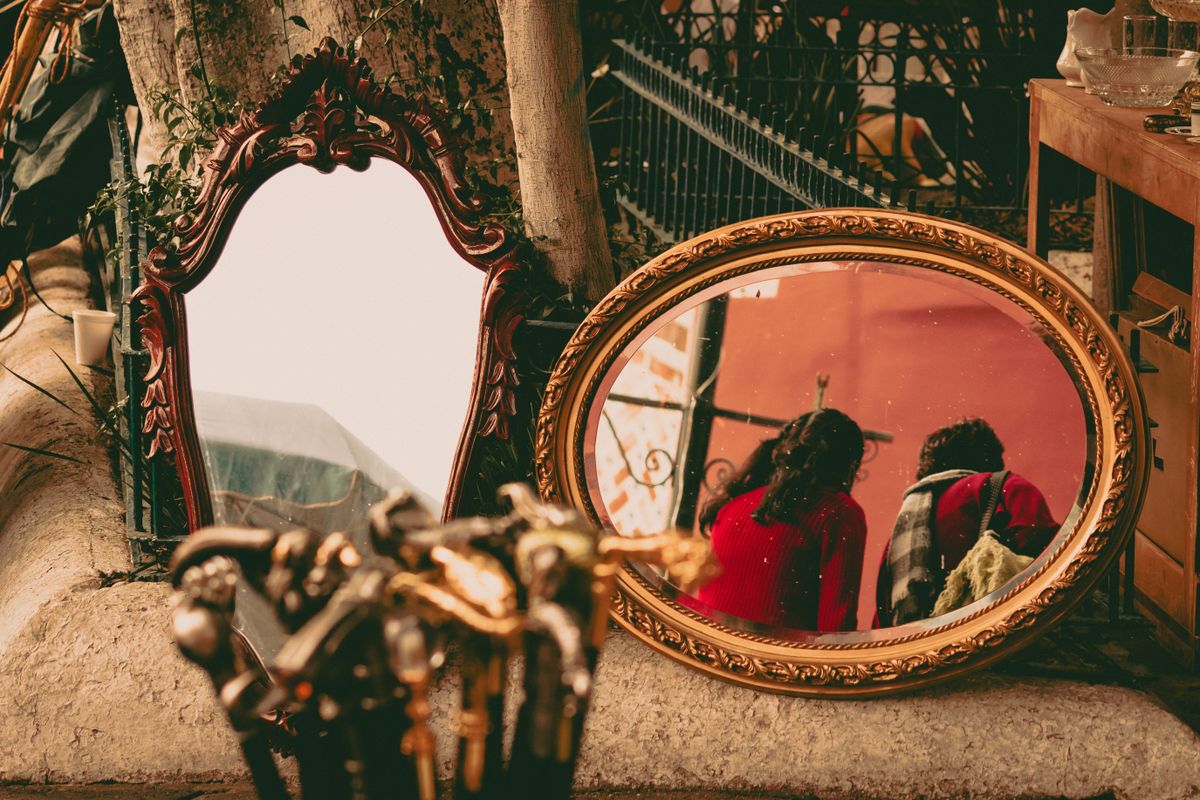
Mirror symbolism in different cultures and religions keeps arriving at the same three ideas — truth, threshold, and danger — even where the traditions never met. Ancient Egypt buried mirrors to guide the Ka; Japan enshrines the Yata no Kagami as a sacred treasure; Hindu Vastu treats the mirror as an energy tool; Buddhism makes it the enlightened mind; and Sufi Islam, the heart polished to reflect the divine. This is the religion-by-religion deep dive. For what the mirror represents in general, see the mirror spiritual meaning and symbolism pillar.
From the polished obsidian of 8,000-year-old Anatolia to the bronze regalia of Japan's imperial household, the mirror has been more than a tool for vanity. Across every major civilization, the mirror was identified as a threshold—a boundary between the physical world and everything beyond it.
Not merely a grooming tool. Not simply a scientific curiosity. A portal, a shield, a divine instrument, and a window to the soul.
The convergence of mirror symbolism is remarkable. When you discover that Sufi mystics, Aztec priests, Shinto monks, and Roman senators all arrived at essentially the same conclusion—that the mirror reveals truth and connects the seen and unseen—you are looking at something deeply consistent in human psychology.
Why Mirror Symbolism Recurs in Different Cultures
Before moving culture to culture, it is worth asking why the mirror generates spiritual meaning in the first place. The answer lies in what mirrors do that nothing else in nature does: they duplicate a living person in real time.
For any culture without modern optics, this presented a puzzling question: What lives on the other side? These are the natural questions of intelligent people observing a strange phenomenon. The spiritual answers clustered around three core ideas:
- The mirror shows truth—what really is, stripped of pretense.
- The mirror is a threshold—a membrane between this world and another.
- The mirror is dangerous—it can capture the soul or attract spirits.
Ancient Egypt: The Ka and the Lady of the Mirror
In ancient Egypt, mirrors were typically made of polished bronze or copper with handles carved in the shape of the Ankh (life symbol) or the goddess Hathor. Known as the "Lady of the Mirror," Hathor used these tools not for vanity, but for protection.
Mirrors were placed in tombs to allow the deceased's Ka (spirit) to recognize itself and regenerate in the afterlife. Gazing into a mirror was understood as confronting the truth of the soul, preparing for the judgment of Osiris.
Japan: The Yata no Kagami
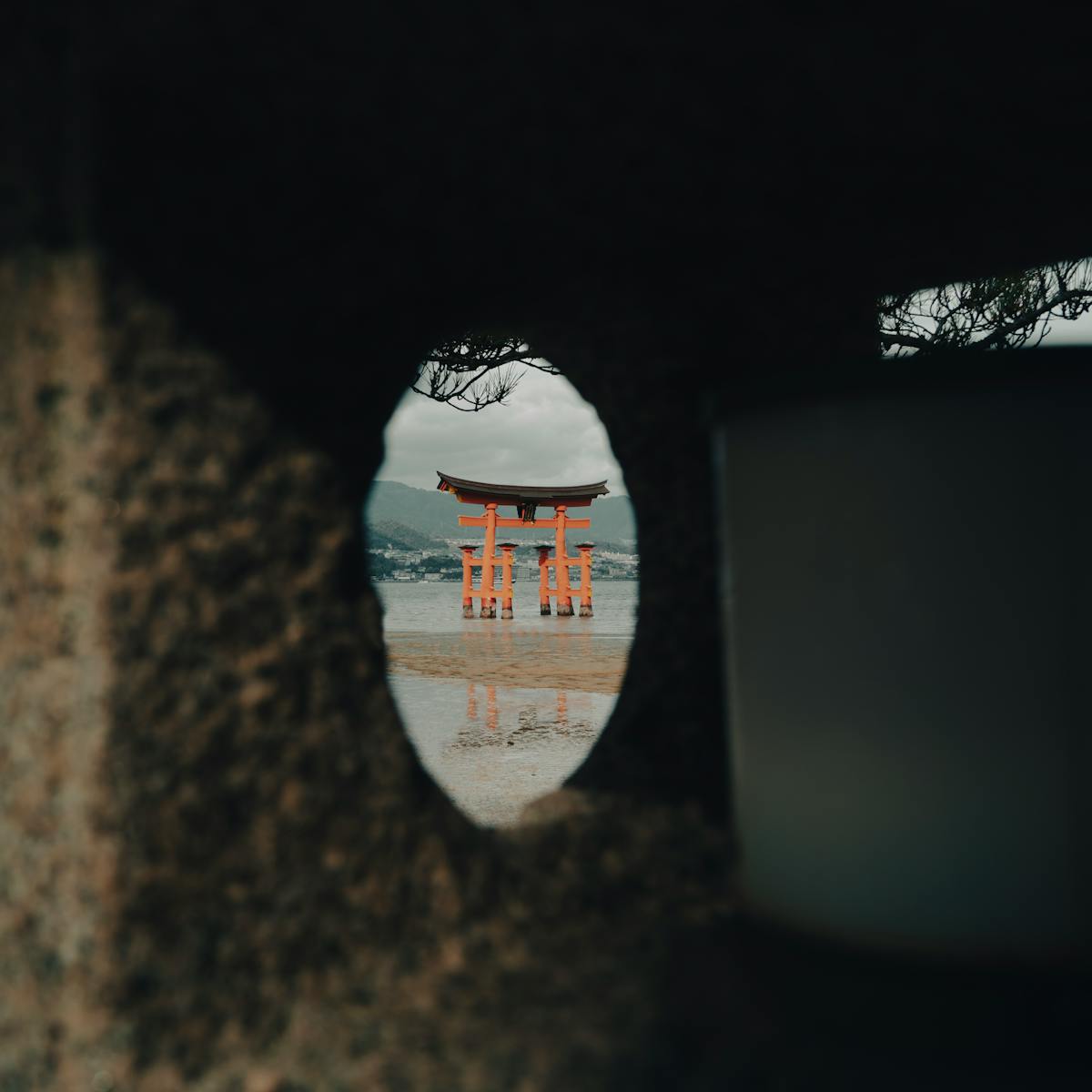
Perhaps no other culture elevates the mirror to a higher status than Japan. The Yata no Kagami (The Eight Span Mirror) is one of the three Imperial Regalia of Japan. According to Shinto mythology, it was used to lure the sun goddess Amaterasu out of a cave, restoring light to the world.
In Shinto shrines, a mirror often serves as the shintai (the object housing the spirit of a deity). Worshippers are meant to see their reflection as a call to moral purity—a reminder to keep their hearts as clear as the mirror’s surface.
Hinduism and Vastu: The Divine Gaze
In India, mirrors are integrated into Vastu Shastra (sacred architecture) and daily ritual. Mirrors are considered powerful tools for managing energy:
- Prosperity: Placed on north or east walls, they are believed to double the flow of positive energy.
- The Soul: Many traditions advise covering mirrors at night to prevent the soul from becoming trapped or confused while traveling during dreams.

Buddhism: The Mirror-Mind
In Buddhism, the mirror is a metaphor for the enlightened mind. The Zen tradition teaches that the mind should be like a polished mirror—reflecting everything but holding onto nothing. Just as a clouded mirror cannot reflect clearly, a mind clouded by attachment cannot perceive reality as it is.

Islamic Sufism: The Polished Heart
In Sufi mysticism, the goal of the spiritual path is to polish the "heart-mirror" (qalb) until it reflects the Divine Truth. A heart rusted by worldly attachment cannot see God. Through dhikr (remembrance), the seeker polishes the rust away until their soul becomes a clear reflection of the attributes of Allah.
What is most striking about mirror symbolism in different cultures is the convergence. Sufi mystics, Aztec priests, Shinto monks, and Roman senators had no contact with each other, yet each treated the mirror as a place where truth, the soul, and the boundary between worlds meet. The glass did not teach them that. They brought it — and the mirror simply gave the questions a surface to ask against.
Each of these traditions has its own deep-dive worth reading: the ancient Egyptian mirror, the Ka, and the afterlife, the full account of mirrors in Hinduism — Vastu rules and scripture, and the feng shui mirror placement rules that grew from the Chinese tradition. And for the symbol stripped back to its core — what a mirror represents before any one culture dresses it — the mirror spiritual meaning pillar is the place to start.
Frequently Asked Questions
What does a mirror symbolize in different cultures?
Across cultures, the mirror symbolizes truth, self-knowledge, the soul, and the boundary between the physical and spiritual worlds. In ancient Egypt it helped the Ka recognise itself in the afterlife; in Japanese Shinto it houses the spirit of a deity; in Buddhism it is the enlightened mind; in Sufi Islam it is the heart polished to reflect the divine. The shared thread is the mirror as a universal threshold between the seen and the unseen.
Which culture believes mirrors can capture the soul?
Several traditions hold that mirrors or reflective water can capture or trap part of the soul if not treated with caution — including ancient Rome (the root of the seven-years-bad-luck belief), some Native American traditions, Indian Vastu practice (which advises covering mirrors at night so the dream-travelling soul is not confused), and ancient Mesopotamian belief. The mirror as a soul-container is one of the most widespread mirror ideas in the world.
What is the meaning of a broken mirror across cultures?
The most widespread belief is the Roman tradition that breaking a mirror brings seven years of bad luck, because the soul was thought to renew in seven-year cycles and to be present in the reflection. But it is not universal: in parts of India a broken mirror is read as releasing accumulated negative energy, and Japanese Kintsugi philosophy treats breakage as something that can be made beautiful. The meaning depends on the culture, not the glass.
Why are mirrors used in Feng Shui?
In Feng Shui, mirrors are used to expand space, double prosperity, and deflect negative energy (Sha Chi) — most recognisably through the convex Bagua mirror placed above a doorway. A mirror is treated as an active manager of Qi, redirecting or amplifying whatever it faces, which is why placement is considered so important.